

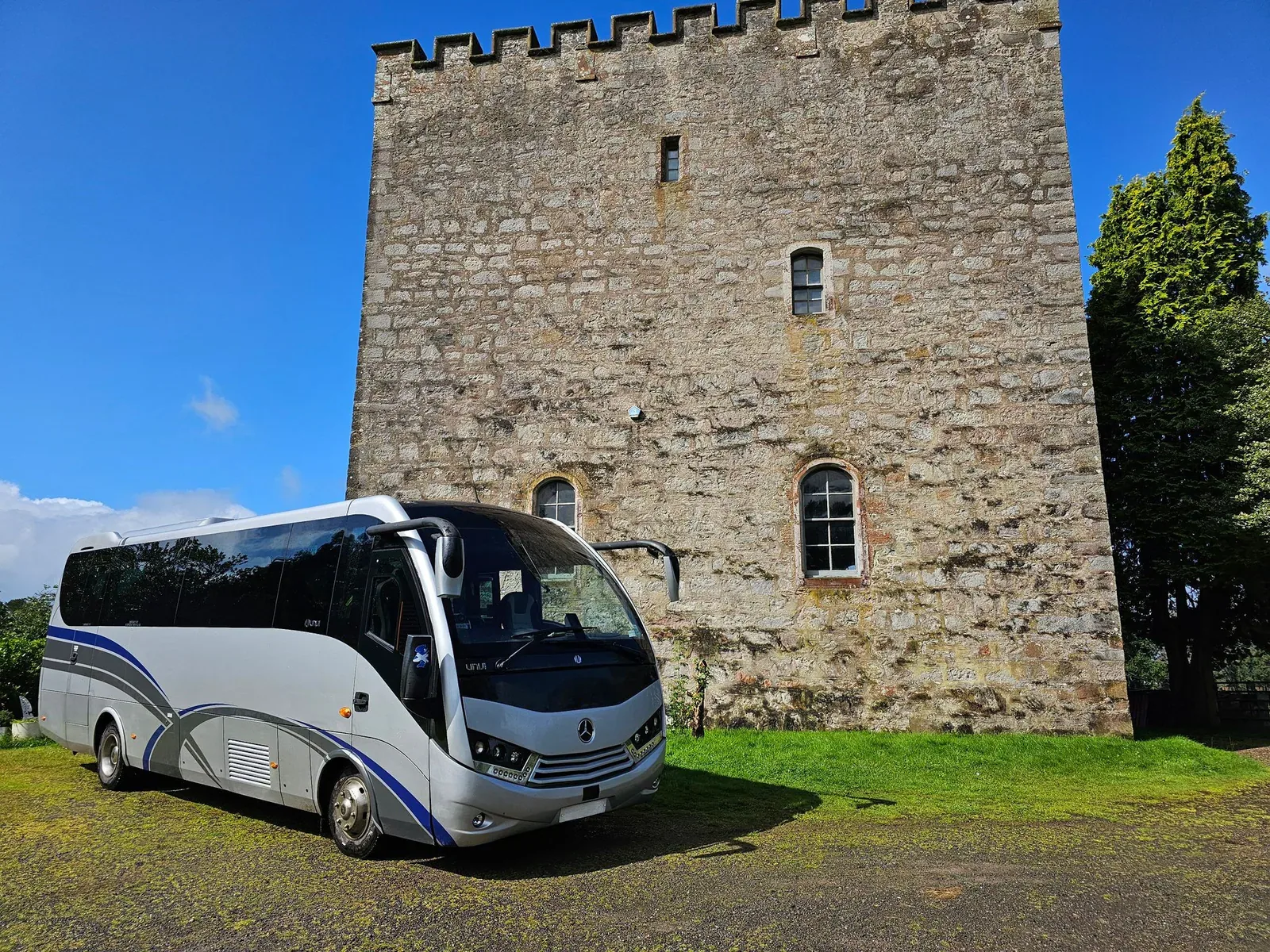
Illustrative coach photograph. It does not depict the hypothetical itinerary or establish the vehicle, seating, features or availability for a booking.
For a coach or minibus journey with several stops, prepare one ordered itinerary rather than a collection of addresses in separate messages. Show who boards or leaves at each stop, the requested timings and any access or boarding requirements. Ask the booking team to review the whole plan before you share it as confirmed.
This guide helps you prepare that brief. It does not calculate a suitable route, promise a journey time or confirm that a particular vehicle can use a proposed stopping place.
Use the worksheet for private planning. If sharing an example publicly, use fictional locations and omit passenger names, contact details and private addresses.
1. Separate the outward and return journeys
Give each movement its own date and stop sequence. The return is not automatically the outward journey in reverse: passengers may leave from another entrance, travel at different times or need different drop-offs.
For every stop, include the full address and a proposed entrance or landmark. Label a map pin as proposed until the collection arrangements are agreed. A venue postcode alone may not identify a suitable place for a coach or minibus to stop.
If your plan includes flights, use the existing group airport transfer checklist for flight, terminal and airport-specific questions. Keep those details alongside the main itinerary rather than starting a second conflicting version.
2. Count passengers on every leg
Record how many people board and leave at each stop. Then calculate the largest number travelling together on any leg. The number of people in the whole booking is not always the same as the number on board at one time.
List luggage and bulky equipment separately. Mention changes along the route, such as bags collected from a hotel before the return. Discuss boarding requirements privately with the booking team; do not put medical information or passenger contact details in a shared public worksheet.
The coach hire and minibus hire pages explain the service options. A vehicle proposal still needs to be checked against your complete itinerary and requirements.
3. Distinguish meeting time from arrival target
Write down the time you want people ready to meet, the requested departure where relevant, and any fixed arrival commitment. Label each clearly. An event start time is not a vehicle collection time.
Allow the booking team to assess the sequence with boarding, travel, stops and applicable operating requirements in mind. Do not assume that a short distance on a map makes an extra stop quick. Ask how waiting and later changes would be handled in your quotation.
4. Use one reusable stop worksheet
Copy this table once for the outward journey and once for the return. Keep requested details distinct from the final agreed instructions.
| Stop | Proposed address and entrance | People boarding or leaving | On board after stop | Requested timing | Notes to check |
|---|---|---|---|---|---|
| 1 | Full address and proposed meeting point | Board: __ Leave: __ | __ | Ready: __ Depart: __ | Luggage, boarding and access questions |
| 2 | Full address and proposed meeting point | Board: __ Leave: __ | __ | Ready: __ Depart: __ | Venue contact or access instructions |
| 3 | Full address and proposed set-down point | Board: __ Leave: __ | __ | Arrival target: __ | Return meeting point to confirm |
Above the table, add the travel date, movement name, maximum people on board and a version date. Keep the organiser's contact details in the private booking correspondence. Add rows when needed; do not hide an extra collection inside a notes field.
5. Check the plan with a hypothetical example
Imagine a 20-person group: 12 people ask to board at Hotel A and eight at Hotel B before travelling to an event venue. The worksheet shows 12 people on the first leg and 20 after the second collection. It also lists everyone's luggage and the venue's requested arrival target.
For the return, suppose all 20 leave the event together and five request the first drop-off. That leaves 15 on the next leg. Record both stops and counts in the separate return worksheet, and ask for the revised route to be confirmed rather than leaving it for discussion with the driver on the day.
This is an invented planning example, not a past VoyaHire trip, a suitable vehicle recommendation or evidence that these stops fit any particular timetable. The booking team would need real addresses, dates and requirements to review the request.
6. Keep changes visible
After sending the brief, put revisions into one updated itinerary. Identify what changed and ask the booking team to confirm any revised arrangements before distributing them as agreed. A changed stop order, departure time or passenger requirement may affect the proposed journey.
Share the latest confirmed version with the lead organiser and travellers who need it. Keep superseded versions clearly marked, so an older message does not become someone's final collection instruction.
For group tours or event transport, VoyaHire provides one managed nationwide booking service using a verified mix of directly managed capacity and licensed operator partners. Send the complete itinerary when you request a tailored quotation. Proposed arrangements remain subject to availability, review and confirmation.
Frequently asked questions
Can the outward and return journeys have different stops?
Yes. Prepare a separate dated stop sequence for each movement. Show anyone joining or leaving at a different place, and ask the booking team to review both journeys before sharing the instructions as confirmed.
Which passenger number matters when people join at different stops?
Show how many people board or leave at every stop, then calculate the maximum travelling together on any leg. Include organisers and accompanying travellers. List luggage and bulky equipment separately; the headcount alone does not establish a suitable vehicle or storage arrangement.
Is a requested collection time a confirmed collection time?
No. Label meeting times, requested departures and fixed arrival targets separately. The booking team needs to review the itinerary before the proposed arrangements can be confirmed. Share the agreed version with travellers, not an earlier request.
How should I add another stop after sending the itinerary?
Put it into one updated itinerary and identify what changed. Include the address, passenger changes and requested timing, then ask the booking team to confirm the revised arrangements. An extra stop may affect the proposed journey, so do not leave it for an informal discussion with the driver on the day.
Should passenger names and contact details go in the worksheet?
Keep contact details and any sensitive boarding information in private booking correspondence. The planning worksheet can record headcounts and practical requirements without listing every traveller. If you share an example publicly, use fictional locations and omit private addresses and personal information.